Home › Walkway and Pathway Paving
Create safe, attractive routes around your property with asphalt walkway paving in St Louis, MO. We design and install smooth paths that handle foot traffic, strollers, and bikes without tripping hazards. From garden walkways to shared community paths, our asphalt solutions are cost effective, durable, and low maintenance.
Precision Asphalt St. Louis provides professional asphalt walkway paving throughout St Louis, MO, Missouri and the surrounding area. Our licensed, insured crew delivers safe, clean, on-time work with a free estimate before anything begins. Call (314) 333-7779 or request your free quote.
Asphalt Walkways & Paths Built for St. Louis Properties
Asphalt walkway paving is not just shrinking a driveway down to a smaller size. The loads, foot traffic, drainage, and edge details are different, and if those are ignored you end up with heaving, cracking, and trip hazards in a couple of winters. At Precision Asphalt St. Louis, we design and build asphalt walkways and pathways specifically for how people move through your property in St. Louis, Missouri, and how our freeze-thaw cycles and clay soils behave.
Most homeowners and property managers call us for one of four reasons: they want a clean, safe path from driveway to front door, they need accessible routes that meet ADA guidelines, they want a paved loop or connector on a larger site like an HOA or church campus, or they are replacing crumbling concrete or mismatched stepping stones. We start every project with a short site walk, measuring slopes, checking where water currently flows, and noting tree roots and existing utilities. That first 15 to 30 minutes determines whether your new walkway looks good only the day it is installed, or still looks good in 10 years.
You do not need to know the technical terms to get a solid result. Our job is to translate what you tell us, like “I do not want puddles here” or “this needs to be easy for my parents to walk on,” into a design that uses the right base depth, asphalt mix, and edging so the path holds up through St. Louis summers and winters.
Planning, Layout, and Permits for Walkways in St. Louis
Before any asphalt walkway paving begins, we confirm what is actually allowed on your property. In the City of St. Louis and many nearby municipalities such as Clayton, Maplewood, and St. Charles, a permit may be required if the walkway ties into the public sidewalk or extends into the right of way. If your project touches a public sidewalk, we help you determine if a sidewalk permit or curb cut review is needed, and we can provide drawings and specs when the city asks for them.
For HOAs in places like Chesterfield, Ballwin, or O’Fallon, your covenants may control path width, color, and whether asphalt is acceptable in visible common areas. Precision Asphalt St. Louis regularly reviews HOA guidelines and submits the simple diagrams and material descriptions most boards request. We can supply photos of previous walkway projects so your board can see exactly what they are approving.
On site, we mark the layout with paint and stakes, then walk it with you before any sod or concrete is removed. This is where we adjust for real-world use, for example widening a tight corner so two people can walk side by side, or straightening a section so snow removal is easier. For ADA-sensitive locations like churches, medical offices, and multifamily complexes, we check slopes with an actual level, not just by eye, so we can hit the 1:20 or gentler continuous slope that wheelchairs and walkers can handle safely.
We also call Missouri One Call for utility locates before excavation. Even shallow paths can cross gas service lines, irrigation, or electrical conduits. Locates usually take two to three business days in the St. Louis area, and scheduling around that keeps your project safe and compliant.
Site Preparation, Base Work, and Drainage That Prevents Future Problems
Most long-term issues with asphalt walkway paving trace back to poor base work or bad drainage. St. Louis has expansive clay soils that swell when wet and shrink when dry. If we lay asphalt directly on that, your walkway will move and crack. Precision Asphalt St. Louis removes soft topsoil and organics, then compacts the subgrade with a plate compactor or small roller until it is firm enough that footprints do not appear.
Next, we install a base layer of crushed limestone, usually 3/8 inch to 3/4 inch rock, at a depth of 4 inches for typical residential walkways and more for common paths that see carts, small maintenance vehicles, or heavy foot traffic. In shaded or wet areas, we often add a geotextile fabric under the base to separate the rock from the native soil. This simple step keeps the stone from pumping into the clay during freeze-thaw cycles and reduces future settlement.
Drainage is addressed before any asphalt goes down. We shape the base so water sheds off the path at about a 2 percent cross slope or follows a gentle crown. Where the path runs alongside a house, we make sure it does not trap water against the foundation. In some St. Louis neighborhoods with older basements and known water issues, we will intentionally pitch the path slightly away from the structure and may add a shallow swale or strip drain to move water to a safe outlet.
Around trees, we consider both roots and future growth. Cutting major roots can stress or destabilize mature trees, so when possible we adjust the alignment a foot or two to avoid them. If the path must pass within the root zone, we may use a slightly thicker base and a lighter compaction approach over that zone to reduce root damage. This helps the tree and reduces the chances of roots lifting the walkway within a few seasons.
Asphalt Mix, Thickness, and Edging Options for Walkways
Walkways and pathways do not carry vehicle loads, but they still need the right asphalt mix and thickness to avoid ruts, scuffing, and early cracking. Precision Asphalt St. Louis typically installs hot mix asphalt at a compacted thickness of 2 to 3 inches for residential paths, and 3 inches or more for HOA and commercial routes that may see carts or maintenance equipment. We use fine-graded mixes that create a smoother, more comfortable walking surface than coarse driveway mixes.
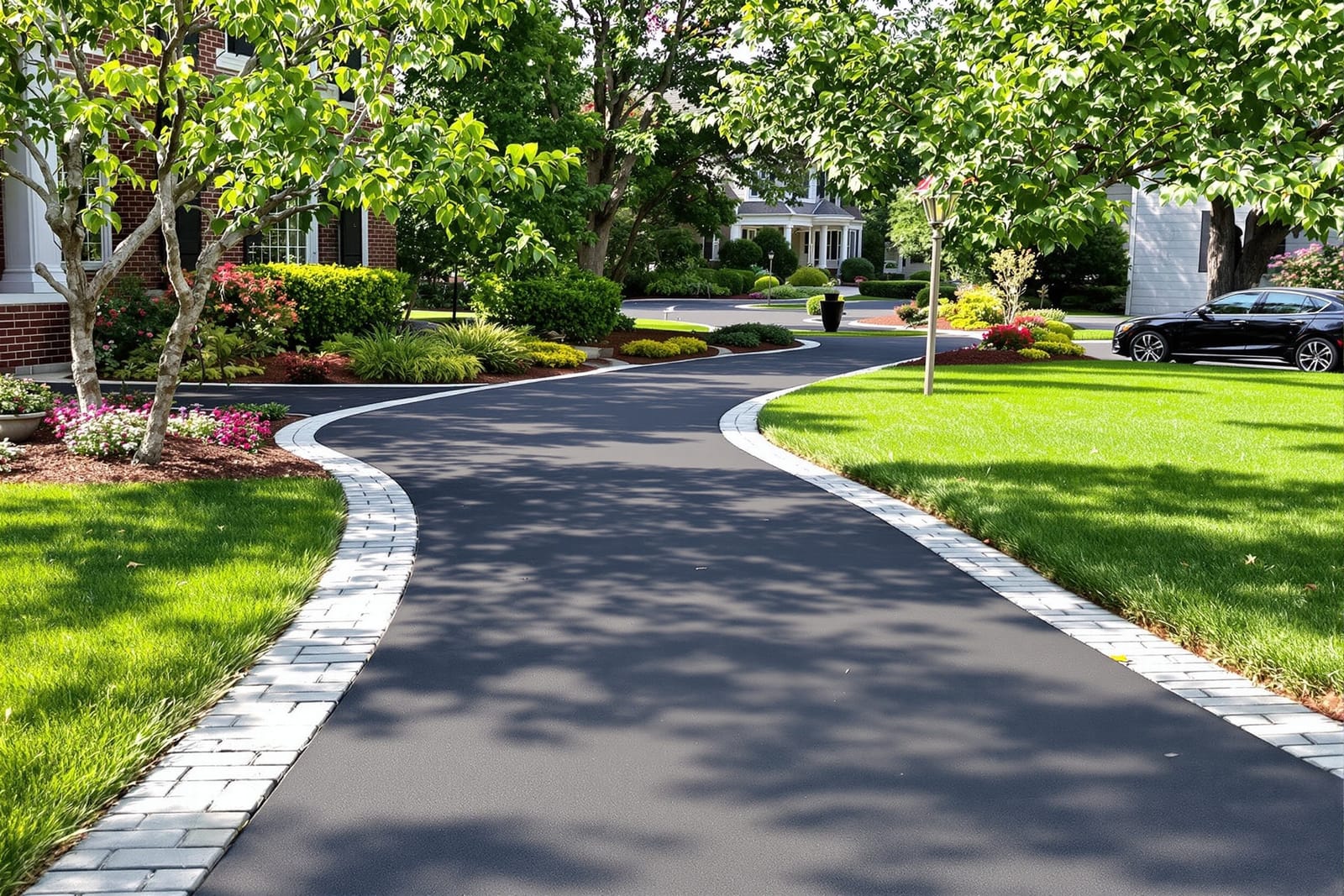
Color is generally the natural deep black that fades to dark gray, but we can add sealcoat later for a richer, darker appearance and added protection. For properties that want a slightly different look without going to specialty materials, we sometimes install asphalt that will be bordered with brick or stone pavers. The contrast between the clean asphalt surface and decorative edges works well for front walkways in older St. Louis neighborhoods like Webster Groves or Kirkwood.
Edge support is a major difference between quality work and paths that crumble. Without support, the sides break off as people step near the edge, or as lawn equipment rides along it. Options include compacted topsoil graded to meet the path, concrete ribbon curbs, or steel edging. On paths that border planting beds, we often recommend a low concrete edge or steel edging so mulch and soil do not spill over and trap water on the walkway.
For projects that need accessibility or frequent stroller or wheelchair use, we keep surface texture tight and level any joints carefully. If the walkway connects to concrete steps or existing slab, we grind or transition the asphalt so height differences are minimized, usually keeping transitions within 1/4 inch where practical to reduce trip hazards.
Cost Factors, Timeline, and Common Issues We Solve
Costs for asphalt walkway paving in the St. Louis area are driven by more than just square footage. Access is a big factor. A straight, open path where a small roller and skid steer can reach will be significantly less expensive than a narrow backyard access that requires more hand work and smaller equipment. Curved layouts, multiple tie-ins to existing concrete, and detailed edging add labor but often deliver a better look and safer walking experience.
Base work is the next major cost driver. Replacing an old gravel path that already has good stone under it is quicker than tearing out failed concrete or soggy lawn. When we price your project, we include a realistic allowance for base thickness based on what we see and what is typical in your part of St. Louis. If we uncover unexpected soft spots or buried debris, we will show you the issue and discuss whether to remove and replace that area or take other measures. We do not simply pave over weak spots, because they almost always telegraph through as dips or cracks.
Weather and temperature matter for scheduling. In our climate, the best paving window is typically March through early December, with a pause only during very cold snaps or heavy rain. Hot mix asphalt needs a certain temperature range to be compacted correctly. If the forecast looks questionable, we will push a job a day or two so we can install your walkway in conditions that will give you a dense, long-lasting surface.
Common problems we are called to fix on older walkways include standing water, sections that have settled at downspouts, tree root heaving, and mismatched step heights where previous repairs were done in pieces. In many cases we can mill the existing asphalt surface down and resurface with a new layer that re-establishes correct slopes without rebuilding the entire base. Where full replacement is needed, we explain why, so you know which parts of the price are unavoidable structural work and which items are optional upgrades, such as decorative edges or extra width.
What to Expect When You Hire Precision Asphalt St. Louis
Working with Precision Asphalt St. Louis on a walkway or pathway project is straightforward. After the initial site visit and layout discussion, we send a written proposal that spells out base depth, asphalt thickness, approximate path width, and any special items like ADA slope targets or edging. You will know exactly what we are building, not just a lump-sum number with vague descriptions.
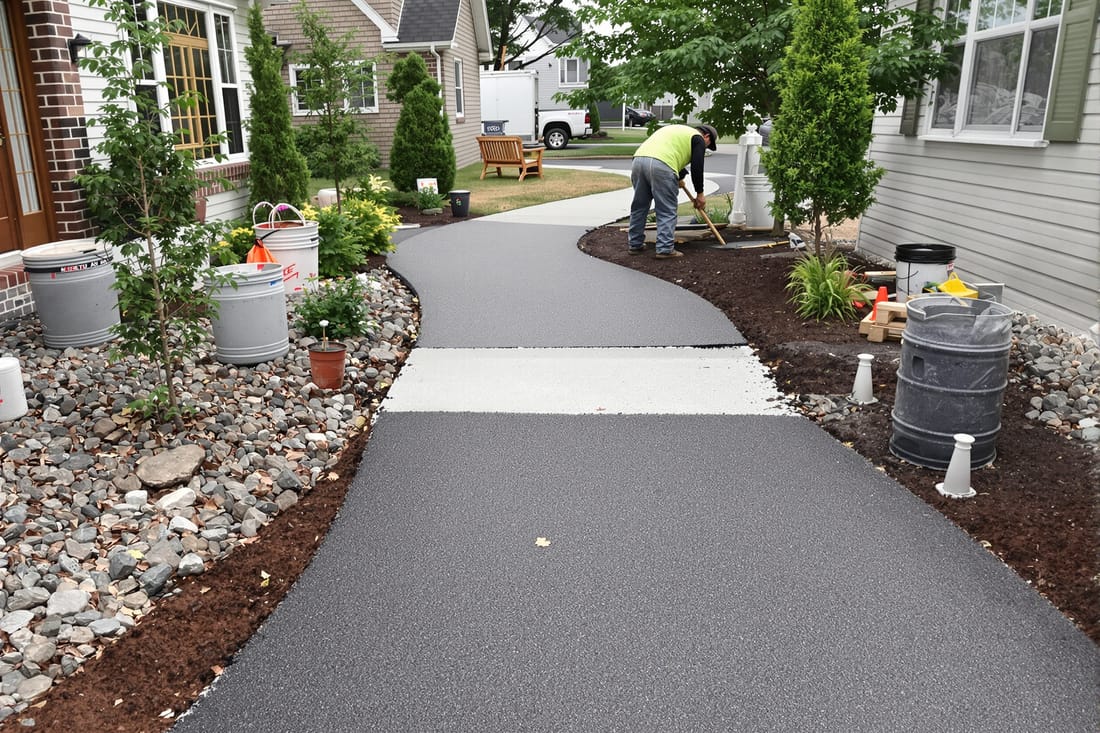
On installation day, we start by protecting nearby lawn and landscaping as much as access allows. We remove old materials, shape and compact the base, then place the hot asphalt in one continuous operation whenever possible. Walkways are usually ready for light foot traffic within a few hours, and we typically recommend 24 hours before moving heavy items like grills or planters back onto the edges.
We walk the finished project with you, checking drainage, edge stability, and transitions to driveways, patios, or steps. We point out where to avoid directing downspouts and where you may want to add topsoil and seed to blend the path into your yard. In most cases, we suggest waiting one to two seasons before sealcoating, so the asphalt has time to finish curing in St. Louis weather.
If you are considering asphalt walkway paving for your home, HOA, church, or commercial site in St. Louis or the surrounding Missouri communities, you can call Precision Asphalt St. Louis for a site-specific evaluation. The more information you share upfront about how the path will be used and who will be using it, the more precisely we can design a walkway that stays smooth, drains correctly, and looks appropriate for your property long term.