Home › Industrial and Heavy-Duty Asphalt Paving
Get pavement built to handle demanding loads with industrial asphalt paving in St Louis, MO. We design and install thick, reinforced sections for truck yards, loading docks, and warehouse areas. Our team considers subgrade, traffic patterns, and drainage to create heavy duty asphalt that resists rutting and premature failure.
Precision Asphalt St. Louis provides professional industrial asphalt paving throughout St Louis, MO, Missouri and the surrounding area. Our licensed, insured crew delivers safe, clean, on-time work with a free estimate before anything begins. Call (314) 333-7779 or request your free quote.
Industrial Asphalt Paving for Tough St. Louis Worksites
If your facility moves heavy trucks, forklifts, or constant equipment traffic, you need pavement that is built for abuse, not for looks alone. At Precision Asphalt St. Louis, we focus our industrial asphalt paving on what your site actually does every day. That means designing pavements that stand up to axle loads, static equipment, turning movements, and chemicals that are common in industrial yards.
Across the St. Louis area, we work on distribution centers along I-70, older manufacturing plants in the city, and industrial yards in places like Earth City and Fenton. These sites often have a mix of new concrete loading docks, patched asphalt from the 1980s, and gravel areas that were never truly engineered. Our first step is always to understand how your site really functions: where trucks queue, where they turn, what loads your racks and storage areas see, and how stormwater currently flows.
Our industrial asphalt paving projects are engineered for high loads, so we pay close attention to subgrade strength, aggregate base thickness, and asphalt mix design. A lot of failures in St. Louis come from old fill soils over clay that were never compacted correctly. We address that up front with test pits or proof rolling, then we design the pavement thickness for your specific traffic, not a one size fits all “commercial” section.
How We Design and Build Heavy-Duty Pavement
Industrial asphalt paving is not just putting down a thick black mat. At Precision Asphalt St. Louis, we follow a step by step process that treats your pavement like a structural component, not just a finish.
1) Site evaluation and coring. On industrial rehabs, we often core the existing pavement to see what is really under there. Many St. Louis industrial properties have a few inches of asphalt over variable rock or even cinders from old rail uses. Coring and test pits let us decide whether to mill and overlay or remove and rebuild from the base up.
2) Subgrade correction. We check moisture content and density. On clay heavy lots that hold water, we may undercut soft spots and install a geotextile separator with new rock. In very wet areas, we might recommend a lime or cement treatment to stiffen the subgrade before any base stone is placed.
3) Aggregate base installation. For heavy duty yards, it is common for us to install 6 to 10 inches of compacted rock, sometimes more where semi trucks or loaded trailers will sit for long periods. We use mechanical compaction in thin lifts, and we proof roll with loaded trucks to catch any pumping or deflection before asphalt is placed.
4) Mix design and lift configuration. Heavy duty areas usually get a thicker binder course, such as a base or binder mix with larger aggregate, topped by a tighter surface course that resists fuel drips and rutting. For example, truck lanes might receive 3 inches of binder and 2 inches of surface, while lighter car parking gets a thinner section. We often adjust the design by zone so you are not overpaying for thickness where you do not need it.
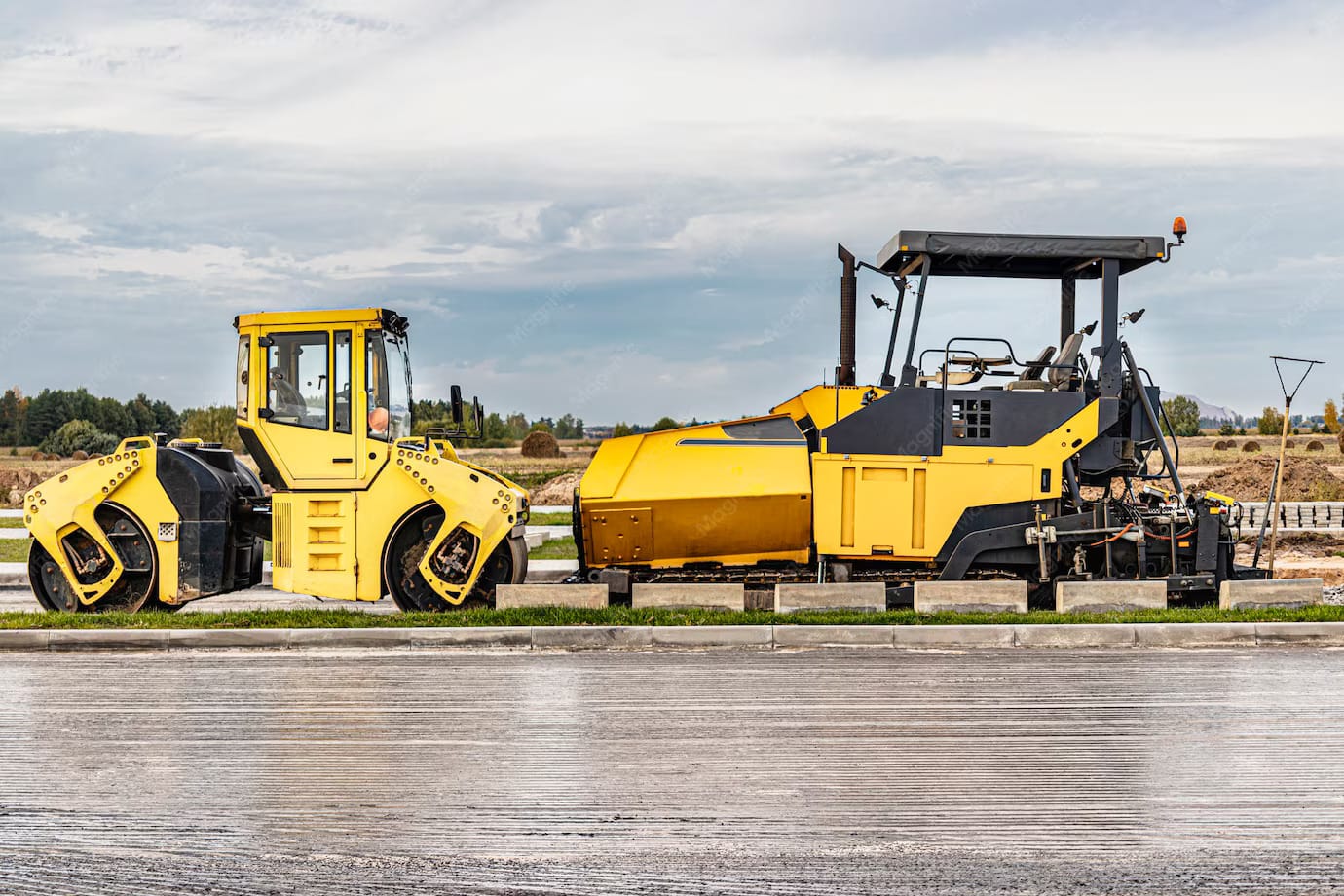
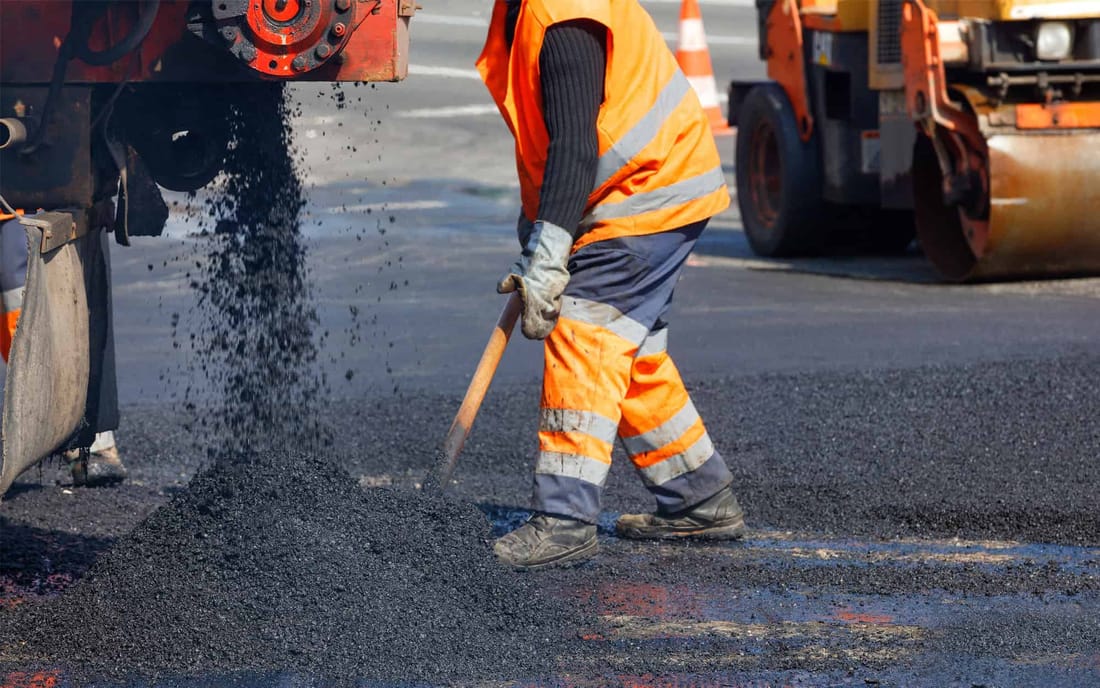
5) Paving and compaction. We use highway class pavers and steel drum rollers, and we control joint locations to avoid weak lines in wheel paths. Temperature and rolling pattern are monitored throughout. For facilities that must stay operational, we phase work so that shipping and receiving can keep moving, usually working in weekends or off shifts to avoid bottlenecks.
Cost Drivers and Budgeting for Industrial Asphalt Paving
Every industrial site is different, but the main cost drivers are fairly consistent across St. Louis. Understanding them up front can help you budget and compare bids fairly.
Subgrade and base work typically has the largest impact. If we can use your existing base and only correct isolated failures, costs can be kept lower. If the existing pavement has widespread alligator cracking, rutting, or pumping when trucks roll over it, that usually points to deeper problems and a need for more extensive base repair. We lay this out clearly so you understand what is absolutely necessary and what is optional.
Pavement thickness is the second major factor. Facilities with light delivery trucks and employee parking can use a moderate section. Truck terminals, intermodal yards, scrap yards, and ready mix plants often require much heavier designs, especially in loading and turning areas. At Precision Asphalt St. Louis, we often design two or three pavement sections across the same site so you get heavy duty thickness only where it is truly needed.
Access and phasing also affect cost. In dense parts of St. Louis where space is tight and operations must stay open, we may need extra mobilizations, temporary ramps, or night work. These are real costs, but proper planning can reduce them. For example, scheduling paving during a known slow season or changing traffic flow for a week can lower phasing costs.
Finally, drainage improvements are critical. Many older industrial sites have flat grades and undersized inlets, which lead to standing water that destroys asphalt over time. During estimating, we check slopes, inlets, and downspout locations, and may recommend adding or adjusting structures. Investing in better drainage often saves money in future repairs and reduces slip hazards for your team.
Common Industrial Pavement Problems and Our Fixes
Industrial asphalt failures in St. Louis tend to follow consistent patterns, especially on older lots built before modern design standards. Precision Asphalt St. Louis has seen most of them, and we approach each issue with a specific fix rather than a blanket overlay.
Rutting in truck lanes and at dock approaches is one of the most common failures. This is usually caused by too little asphalt thickness, an underdesigned mix, or a weak base. Instead of just adding a thin overlay, we often mill out rutted lanes to remove the deformed material, correct the base if needed, and replace with a stiffer mix and added thickness in the wheel paths.
Alligator cracking in storage or staging areas often points to base failure or chronic saturation. In these zones, patching just the surface is rarely enough. We typically sawcut the perimeter, excavate the failing section down into the base, and rebuild with new aggregate and thicker binder and surface lifts. If the cracking follows old trench lines or utility cuts, we may reinforce those specific areas to avoid repeat settlement.
Fuel and chemical damage is another issue around loading docks and maintenance buildings. While asphalt holds up well to incidental spills, chronic exposure can soften the surface. We address this by using mixes with tighter gradation and quality binders, and in extreme chemical loading areas we may recommend concrete aprons tied into the asphalt so each material is used where it performs best.
Freeze thaw cycles can be hard on pavements along the Mississippi, especially where water is trapped. We check for low spots that pond water and correct grades during milling or reconstruction. Good compaction, edge support, and functioning inlets reduce the amount of water that can enter and expand under the pavement during winter.
Planning Your Project With Precision Asphalt St. Louis
For industrial and heavy duty asphalt work, planning is just as important as the paving itself. We start each project with a walkthrough that includes your operations or facility manager so we understand your shipping schedule, safety requirements, and any regulatory constraints you face.
We then create a phasing plan that shows which areas will be closed, for how long, and what temporary routes or staging areas will be used. For busy warehouses or plants in the St. Louis metro, this often means splitting the job into several phases so you always have access to docks and employee parking. We coordinate with your security and safety teams so traffic control, signage, and barricades meet your internal standards.
Communication is straightforward. Before mobilization, Precision Asphalt St. Louis provides a written scope, a pavement section diagram for each area, and a schedule with contingencies for weather. During the work, your point of contact gives daily updates so you know exactly what has been completed and what comes next.
If you are planning a major expansion or converting part of your property from gravel to paved, we can also work from civil plans, suggest value engineering options, or help your engineer refine pavement sections based on local soil and traffic knowledge. By the time we place the first ton of asphalt, you will know what you are getting, why it is designed that way, and how it should perform under your specific industrial loads.