Home › Asphalt Resurfacing & Overlays
Revive tired, weathered driveways with professional asphalt resurfacing in St Louis, MO. We repair underlying issues, then apply a smooth overlay that improves appearance, ride quality, and protection. Our team evaluates whether your driveway is a good candidate for an asphalt overlay or if deeper repairs are needed for lasting results.
Precision Asphalt St. Louis provides professional asphalt resurfacing throughout St Louis, MO, Missouri and the surrounding area. Our licensed, insured crew delivers safe, clean, on-time work with a free estimate before anything begins. Call (314) 333-7779 or request your free quote.
Asphalt Resurfacing & Overlays in St. Louis, MO
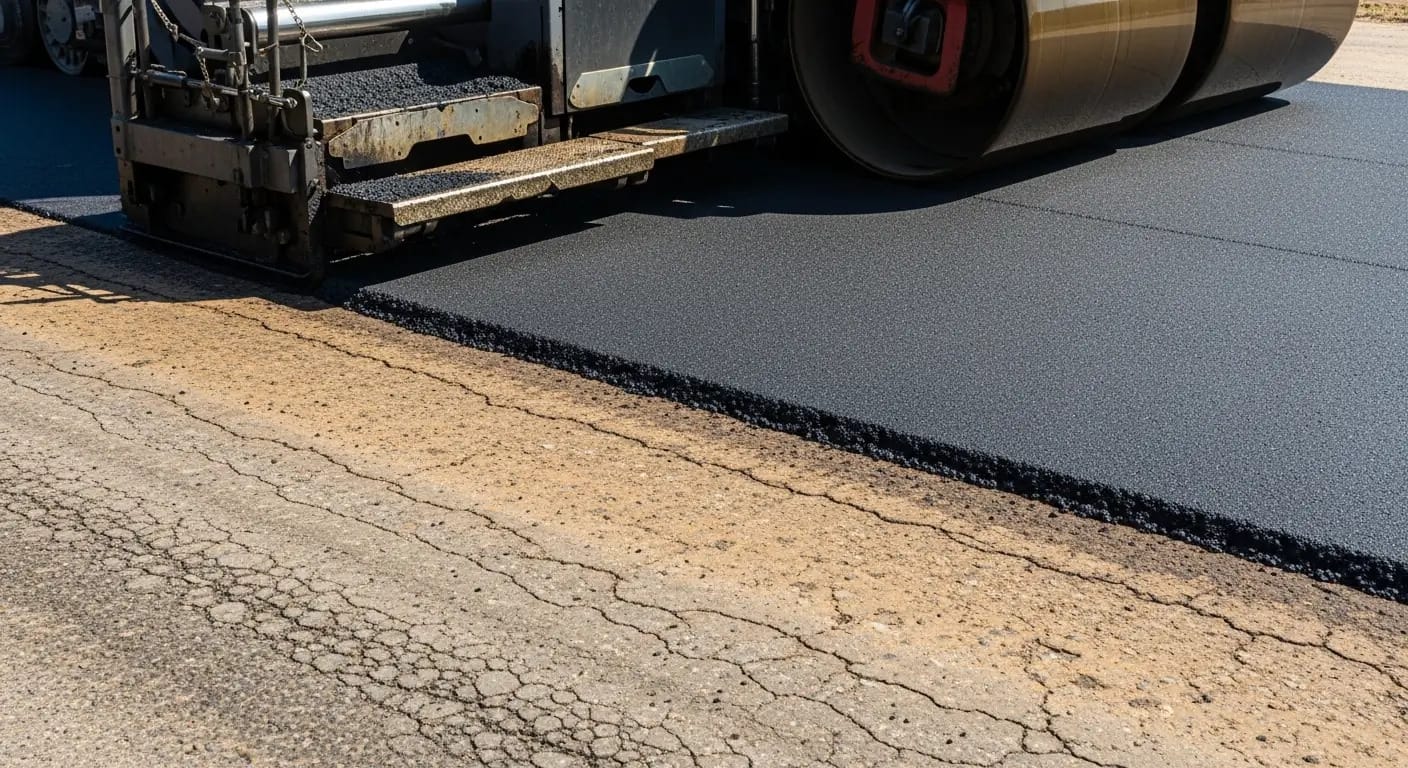
When asphalt starts cracking, raveling, or holding water but the base is still solid, resurfacing is usually smarter than full replacement. Asphalt resurfacing (also called an overlay) means we grind or clean the old surface, repair the weak spots, then install a new asphalt layer on top. You get a fresh driving surface without paying to tear everything out.
Precision Asphalt St. Louis focuses on this kind of work for parking lots, driveways, and private roads around St. Louis. We inspect the pavement, figure out what can be saved, and explain honestly whether resurfacing makes sense or if a full tear out is safer long term. In many St. Louis neighborhoods, especially those built in the 70s and 80s, the base is still usable. A properly planned overlay can extend the life of your pavement 10 to 15 years, sometimes more.
Our goal is to give you a clear, direct plan. No vague promises. We show you problem areas on site, explain what we will mill, patch, or rebuild, and quote the work so you know exactly what the new surface will look like and how long it should last.
How Asphalt Resurfacing Actually Works
A good overlay starts with preparation, not just putting new asphalt on top of old. Our crews begin with a detailed walk through. We look for structural cracks, soft spots, drainage problems, and areas where the surface is pumping water or flexing under load. If we just paved over these, they would reflect through the new surface within a year or two.
Next, we handle repairs. This usually includes full depth patching where the base has failed, saw cutting around potholes, and digging down to stable material. We replace weak sections with compacted aggregate and base asphalt so the new surface has something solid to sit on. On commercial lots and busy drive lanes, this step is critical.
Then we deal with height and transitions. In St. Louis, many older lots already sit close to garage slabs, door thresholds, or sidewalk edges. To avoid creating trip hazards or water dams, we use asphalt milling along curbs, entrances, and around drains. A cold planer grinds off a controlled depth, often 1 to 2 inches, so we can install the new mat without raising the overall grade.
Once the surface is repaired and milled, we clean thoroughly with mechanical sweepers and blowers. Any dust, loose rock, or vegetation left behind will weaken the bond. We then apply a tack coat, a thin sprayed layer that helps the new asphalt fuse to the old surface. Only after this prep do we place the new asphalt, machine paving where possible for a smooth, even mat, and compact it with steel drum and pneumatic rollers to lock in density and smoothness.
Material Choices, Overlay Thickness, and Design Options
Not every overlay is the same. Precision Asphalt St. Louis adjusts the asphalt mix and thickness based on how the pavement is used. For light residential driveways, a 1.5 to 2 inch overlay with a fine surface mix is usually enough, giving a smooth finish that sheds water and handles cars and light trucks.
For commercial parking lots, multifamily properties, and delivery areas, we often recommend 2 to 3 inches of new asphalt or a combination of an intermediate course and a finer surface course. In drive lanes that see garbage trucks or delivery semis, we may thicken the overlay or reinforce specific wheel paths to prevent rutting.
We also talk through slope and drainage. During resurfacing, we can tweak grades within limits. For areas that constantly hold water near entrances or low spots by curb lines, we may increase milling depth locally, then re profile the asphalt to push water toward existing inlets or the street. Small adjustments like this are the difference between a fresh black surface that drains and one that still puddles after every St. Louis rain.
Finish options include standard blacktop, tight machine finish for ADA routes, and striping layouts that improve traffic flow. If your lot needs restriping to meet current ADA parking requirements, we design the new striping plan around current codes and your overlay thickness so curb ramps, crosswalks, and access aisles stay compliant.
Local St. Louis Factors: Weather, Drainage, and Permits
St. Louis weather is hard on asphalt. Freeze thaw cycles, snow plowing, and summer heat all work against the surface. When we plan an overlay, we look at where water is currently sitting and how snowplows operate on your property. Low areas that pond in winter often break down fastest because water freezes in cracks and widens them. Fixing drainage before the overlay goes down makes the new surface last longer.
The construction season here is also weather dependent. For best results, we schedule overlays when daytime temperatures are stable and the base is dry, which is usually spring through early fall. We can work outside those windows in certain conditions, but we will tell you honestly if timing will affect quality.
On permitting, most private driveways inside St. Louis city limits and many municipalities do not require full engineering for a simple overlay, but commercial projects may trigger review, especially if we change drainage paths or modify access near public streets. HOA communities around St. Louis County sometimes have rules about working hours, equipment parking, and temporary road closures. Precision Asphalt St. Louis checks these items before scheduling, coordinates with your property manager or city, and sets up clear traffic control so tenants, customers, or residents can still function while we work.
Cost Drivers and How We Control Your Budget
The price of asphalt resurfacing is mainly driven by three things: the amount of repair work below the surface, the overlay thickness, and how much milling or grading is needed. A large, fairly stable lot that only needs spot patching and a standard overlay per square foot usually costs less than a small area with major base failures and drainage corrections.
Material prices matter too. Asphalt is tied to oil costs, so rates can shift. To protect you from surprises, Precision Asphalt St. Louis writes proposals that spell out square footage, repair quantities, and overlay thickness in inches. If we find hidden damage once we start, we do not just pave over it. We stop, show you exactly what we found, and price the change before proceeding.
Access and phasing also affect cost. A shopping center that must stay open may require night or early morning work, segmented paving, and more labor to move traffic control. Multifamily properties sometimes need the lot done in stages so residents always have somewhere to park. We plan these logistics upfront, which keeps crew time efficient and reduces wasted trips. Straight talk on scope, schedule, and staging keeps your resurfacing project on budget and predictable.
What You Should Know Before Hiring an Asphalt Resurfacing Contractor
Before you sign with any contractor, confirm that an overlay is actually appropriate. If your pavement has widespread deep cracking in a grid pattern or the surface moves under load, the base may be failing. In those cases, resurfacing will only hide problems for a short time. Precision Asphalt St. Louis will tell you when not to resurface, even if it means we lose the job.
Ask for specific details, not just a one line quote. A solid proposal should list milling areas, patching quantities, overlay thickness, and whether striping is included. It should spell out how drainage issues will be handled and what type of mix will be used in traffic lanes versus parking stalls.
Check that the contractor has experience with local conditions. St. Louis has a mix of clay soils, steep drives, and older storm systems. A contractor who understands how our soils hold water and how freeze thaw cycles attack weak spots will design a more durable overlay. We document compaction efforts and pay attention to tie ins at street entries, sidewalk crossings, and building thresholds so you do not end up with trip edges or standing water.
Finally, talk about maintenance upfront. A resurfaced lot or driveway will last longer if it is sealed at the right time, striping is kept visible, and small cracks are sealed before water gets in. When we finish an overlay, we leave you with a simple maintenance plan that explains when to sealcoat, when to expect minor cracking, and how to budget for the next round of work so there are no surprises later.